John Singer Sargent - Sketches

On my usual commute, the train always passes by Brookwood Cemetery, the largest burial site in the United Kingdom. I plan to research the site very soon, as you must gain permission from the wardens before walking around un-guided. One interesting fact about it's residence, is that the artist John Singer Sargent is buried there (Brookwood was a cemetery for London inhabitants when the inner-city sites were under strain).

The painting I have always identified most with Sargent is "Gassed" which he painted in 1919 whilst he was commissioned by the British Ministry of Information. The painting portrays the disastrous aftermath of a mustard gas attack, with a line of blinded soldiers marching holding onto each other's shoulders.


Sargent travelled to the Western Front in 1918, he was determined to paint an epic work with many human figures, but struggled to find a situation featuring both American and British soldiers. The "harrowing sight" he encountered was at The Second Battle of Arras on the 21st of August 1918.

After returning to England, he completed the painting from his studio in Fulham. It was voted picture of the year by the Royal Academy of Arts in 1919, and is now held in the Imperial War Museum, along with these charcoal sketches of the plan.

The painting provides a powerful testimony of the effects of chemical weapons, as vividly described in Wilfred Owens "Dulce et Decorum Est"


I found some large scans of his original charcoal sketches for "Gassed", I would assume he completed them whilst posted at the Western Front, he took his findings back home to complete the commission for the British Ministry.


These are all now in the collection of the Imperial War Museum. I have never seen these before, and i think they actually give a very different response to the scene.
To those familiar with the painting, I hope these are interesting to see!

ALSO, leading on from this,

I had a fantastic reaction to my last post regarding Frith Hill POW camp, some very interesting responses. I am planning to take the slide to the Aldershot Military Museum, to see if they can determine if it definitely IS from Frith Hill, then, we may have some interesting prospects for it in the future!

Thanks for reading, as always!

Aldershot History - Frith Hill

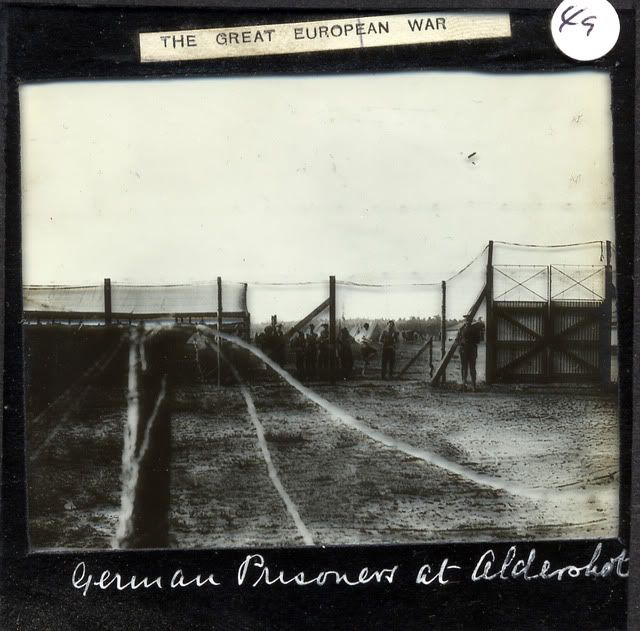
As some know, I am currently undertaking a research project of the Hampshire and Surrey area during the first and second world wars. Obviously, Aldershot has a rich and proud military history, but i am more interested in digging out lesser-known events and areas, particularly the few prisoner of war camps that featured on the heathland very near my home. I was lucky enough to discover a 'Magic Lantern' glass slide on Ebay, which depicted (very unclearly in their original picture) a photograph taken of a very early camp of German prisoners. I managed to buy it, and after a long wait for it to arrive, I have finally scanned it in. Here is the first one to show you the slide casing details,


As you can see, there was a clear headline of "The Great European War" - referring to the First War of 1914-1918. The second line reads "German Prisoners at Aldershot" but does not provide a date.

After my own research (which could very well be incorrect, but I'm pretty confident!) I believe this to be a photograph of the 'Frith Hill' prisoner of war camp which was created in Aldershot during August 1914, as there were no other specifically built prisoner of war camps built in Britian at the time. It was a disused industrial area, in a suitable position due to it's closeness to the coast and rest of the south's road access. It was initially used to process prisoners before they were passed to various locations around the country.

I scanned the glass plate and managed to get quite a good result, considering it's nearly 100 years old! I chose not to edit out the damage to the plate, as i find it all part of it's interest!


My research leads to believe that there were both German and Austrian prisoners at the camp, and the description's i have found of "vast wire fencing and guard posts linked by telephones" fits the picture well enough! Inside the camp, they lived in the same bell tents as the British Army. Inside the camp there was also a post office a hospital and sports areas. The prisoners and internees received the same food ration as the British Front Line troops, which of course, wasn't the case for the captured British prisoners by Germany. This is what interests me about these British camps, it was a completely different environment to those abroad. I agree that it must have been awful for the prisoners to have been kept away from their homeland and families for so long, but no evidence states that they were mistreated. I was relieved to hear this, as i would have hated finding out a more unpleasant story about a place so near to my home!

I asked my Grandad about these camps which were in the area during World War 2, and he confirmed that the later camps involved the prisoners in the agriculture of the area, with German and Italian soldiers helping in the surrounding farmland.

Apparently, there was 6 successful escapes from Frith Hill, which caused serious alarm to the surrounding areas, with thousands of police and soldiers joining the search to find them. Only one evaded their capture, and escaped the camp.

In four years, only 3 or 4 inmates died at the camp, and were buried nearby. I would be interested to see what lies on this area now,

I know of later camps being build on the common land very nearby, so that is my next research venture, but to find such an early example is very exciting!
The picture is very telling of the fear, the barbed wire fence in the foreground preventing the photographer from approaching, and the men clasping at the fence is of course, upsetting. I wonder if it was taken by a soldier or civilian? For a local of the area, it must have been quite a spectacle to behold, and i would imagine, a very frightening prospect.

Now, for the record, this is simply for my own historical understanding, I obviously find these events upsetting, however, we can't deny the past, and also, one must remember that the English camps were very different to those over seas. Considering my paternal Grandmothers side of the family were Jewish and living through each of the world wars, I do not take this matter of history lightly, but that is another story all together! But I find it very important that we learn as much as we can about our (not so distant!) past.

I hope for those familiar with my local area, that was useful!

Thanks for reading!

Katie

Francesca Woodman at Victoria Miro


At thirteen, her artist father, George, gave Francesca Woodman a camera, a Yashica TLR. It was the principal camera she employed throughout her single decade long career. The above photograph is a rare moment of her experimenting with Large Format, she also created some rare colour images, which are included in the edit at the Victoria Miro Gallery.

Her first acknowledged photograph is a premonition of what lay ahead in her work:


Self-Portrait at Thirteen, 1972.


I believe the Victoria Miro was the perfect place for the Woodman show, anywhere too clinical would have sucked the life out of these delicate prints. The dusty floor and battered wooden staircase only complimented the images! There was a variety of print size, ranging from around 6cmx6cm, with work shown on both floors. It was very special to finally see her work in the flesh.

I am usually not enthralled by self portraiture. I am particularly picky about female portraiture (and certainly have no interest in indulging in it myself!). There are plenty of "Homages" to Woodman, black and white blurred faces and naked shapes crouched in corners, none of which could possibly contend, they actually do more harm than good (in my eyes) to contemporary female projects.

Woodman's focus on the relationship with her body as both the object of the gaze and the acting subject behind the camera is undeniable. And yet, she is often absorbed or hidden by her dilapidated, crumbling surroundings. She becomes a ghost, or a memory, not a solid female form. For someone so young, she seems delicate and certainly vulnerable. Her labyrinth surroundings are just as mystifying, with surreal mirrors and doors appearing balanced in the centre of the rooms, and mystical shapes appearing in doorways.
She is not always alone, as other hands reach into the corner of the frames, and curtains of hair rest over battered armchairs.

Much has been written about the use of the cable release in this self-portrait, as a "surrogate umbilical". And throughout Woodman’s portraits, even when there is no self-awareness of the camera, the viewer is always meant to be part of the drama as voyeur. The images were meretriciously planned, with Woodman often making sketches of what she planned to photograph first.

To me, her message is clear. She approached the language used by generations of male photographers who have used woman as a “canvas” to paint their own visions, and made a assault on this tradition. Her images are an exploration of form, texture, and light. The body as an aesthetic landscape, rather than an obvious sexual object.

Up until her untimely death in 1981, aged just 22, Francesca Woodman produced an extraordinary body of work, over 800 images are held in the archive. I find it almost impossible to believe that such mature, prolific work could be created by someone in their teens. She was a truly unique talent, and this exhibit was a wonderful showcase of her work.


"My life at this point is like very old coffee-cup sediment and I would rather die young, leaving various accomplishments… instead of pell-mell erasing all of these delicate things…." - Francesca Woodman

Happy Birthday A.A. Milne

Beloved author A.A. Milne was born on the 18th of January 1882, in Kilburn London.

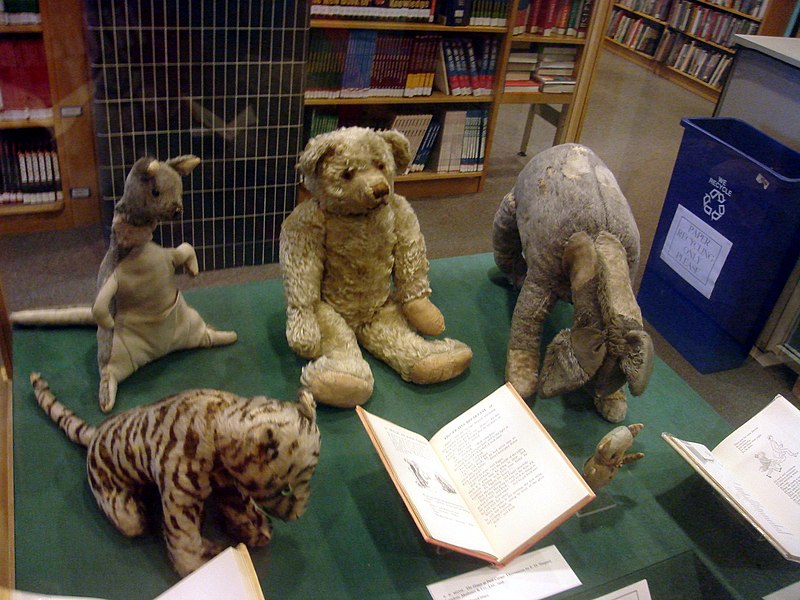
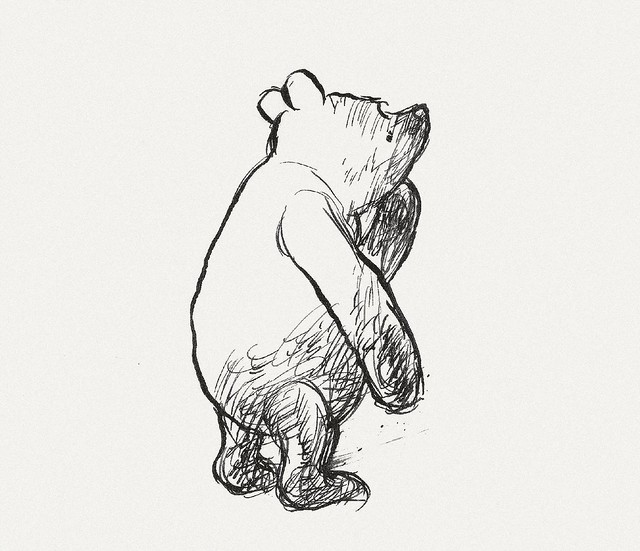
Milne is most famous for his two Winnie-The-Pooh books about a boy named Christopher Robin after his son, and various characters inspired by his son's toy animals. Christopher Robin Milne's stuffed bear, originally named "Edward" was renamed "Winnie-the-Pooh" after a Canadian black bear named Winnie (after Winnipeg), which was used as a military mascot in World War I, and left to London Zoo during the war. "The pooh" comes from a swan they used to called "Pooh". E. H. Shepard illustrated the original Pooh books, using his own son's teddy, Growler ("a magnificent bear"), as the model. Christopher Robin Milne's own toys are now under glass in New York.

I think everyone has a soft-spot for these stories, they are absolutely charming.

Happy Birthdays Mr Milne!


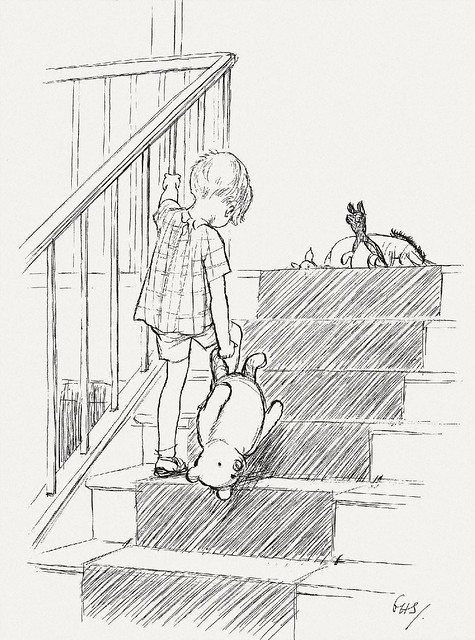
"He nodded and went out ...and in a moment I heard Winnie-the-Pooh
– bump, bump, bump – going up the stairs behind him."


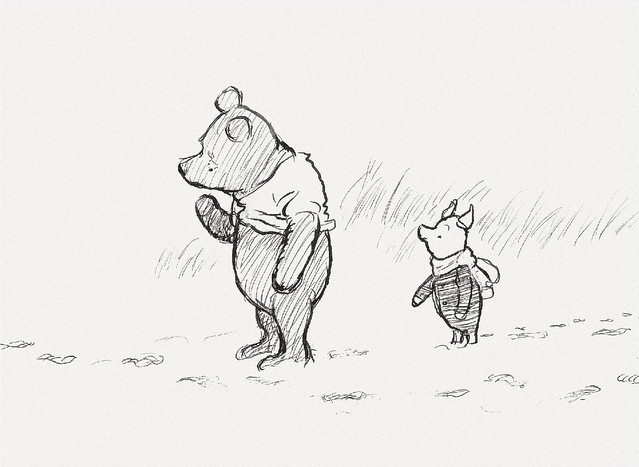
..."What do you see there?"
"Tracks," said Piglet. "Paw-marks..."
Oh, Pooh! Do you thinks it's a – a – a Woozle?


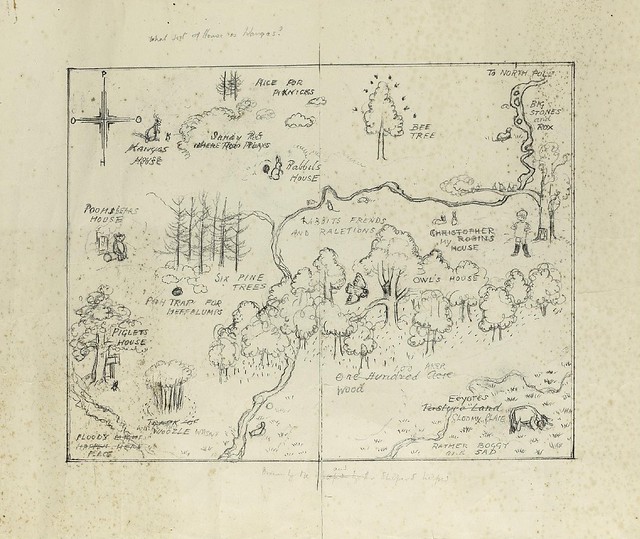
The original 100 acre wood map


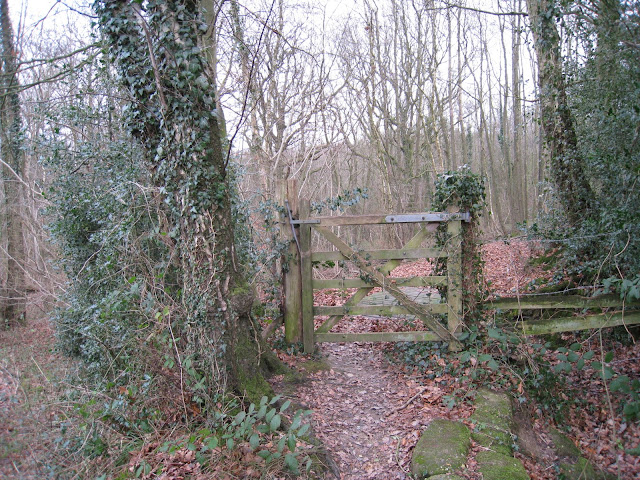
On the way to "Pooh-Stick Bridge" in the Ashdown Forest


Christopher Robin's original toys, now kept in the New York Public Library.


"If you live to be 100, I hope I live to be 100 minus 1 day, so I never have to live without you."

Blackbird singing in the dead of night


I have a new friend. A very determined Mr Blackbird has begun to perch in the tree by my window and chirp through the small hours, luckily, I find it rather relaxing.
It's so nice to hear it clearly without the sounds of traffic, apparently Robins can also be culprits of night singing, so i'll have to listen out to see if it becomes a choir!

-What to listen out for-
Goodnight!

Welcome 2011!


Okay, so it's a little bit late, but I haven't had my laptop on me for a while, as i actually managed to get a few days holiday! Horrah!

HAPPY NEW YEAR EVERYONE!

I had a really fantastic 2010, fingers crossed for 2011...

A few of the highlights from 2010 included:
Finally graduating with a mark I wouldn't have dreamed possible when i first started university...
Having a great third year in general - Bruce having another wonderful set of house mates meant dissertation time was still a blast!
Everyone coming together for our end of year show, and then taking part in the Photography show at The Old Truman Brewery...
The January snow that did it's usual job of crippling England, but allowing me to build the best Snowman/Snow Dog ever (and preventing me from running away from dissertation!)...
Beginning working at Diemar/Noble photography, which has provided me with a great first insight into the gallery and art market environment...
Spending a lovely few days with Marjolaine Ryley in Newcastle helping with her "Growing Up in the New Age" project...
Having a brilliant 21st Birthday, and receiving my first ever sewing machine...
FINALLY seeing The Libertines live, something I had nearly given up on ever experiencing (I forgive you guys!)...
The Darkroom Crew taking on the Brighton Photo Festival in the pouring rain and howling wind (and sheltering in Harry Ramsdens for nearly 3 hours)...
Having a wonderful summer holiday with my family (our first one together in quite a few years!) and producing "Middlemist" - proof to myself I can make work outside of Uni
Great dinner parties with Helens wonderful roast dinner skills! And drinking Champagne out of coconuts!
And of course, mine and Bruce's second year together...Bruce has had a really great end to the year, with a feature in 1000 words magazine and being nominated for Terry O'Neal, he's doing rather well! Him being back in in Kent has provided us with some great English countryside (or seaside) to wander, Jock the dog to look after, and generally, just being able to relax in a room bigger than a shoebox! (I do miss his little student houses terribly though!) Ahhh memories!

It really was the first year in quite a while where I haven't felt constantly worried...still pretty worried most of the time, but i definitely felt more at ease with things...apart from a few weeks ago when i wanted to re-enact some Carrie-style anger in the middle of The 'Bucks after too much Christmas rudeness...but that's just understandable!

NOW, the plan for 2011,

-Try to continue being creative, whether I know the direction I'm heading or not. Just keep at it!
-Reuse-Make-Recycle, and keep away from high streets. I will try to be as thrifty as possible, and try to continue learning new crafts, keep practising my knitting and crochet skills, so i can knit everyone nice Christmas presents for next year ;)
-Keep reading. Devour every interesting history book i can get my hands on, particularly, learn a greater knowledge of British History (to compensate for the fact I probably won't be able to afford a post-graduate degree. Ever.)
-Most importantly, try to find a interesting job within my chosen fields which will allow me to do all these things!! (and to keep any negative experiences i have whilst still under the title of 'Barista', to use as creative output one day! You have been warned.)

Oh no wait!

MOST most importantly,

Just. Be. Happy.

Wise words my best friend once told me!

Simple, but necessary. :)

Thanks for reading! I hope to get back to more interesting (and less self-indulgent) blogging ASAP! I have 5 photo's left on my camera to shoot, then i may actually have something to show!!


Katie