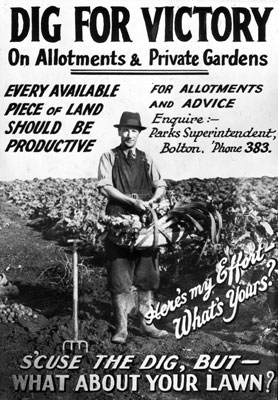
Admittedly, i started reading 'The War and Uncle Walter' a month ago but was distracted by other matters and so abandoned it in it's early stages. But over the last few days, after getting settled back into it, I finished it in two evenings. I originally found the book in Oxfam and gave it to my Uncle to read, as we share a keen interest in British History - particularly WW2 and The Home Front ('Dig for Victory' reigns true for both of us!) and he passed it back, knowing I'd love finding out about Uncle Walt!
The book is extracted from the 11 notebooks of Walter Musto, a gentleman who started writing on January 1st 1939 when he was looking forward to retirement and being able to spend more time pottering in his garden. Of course, WW2 ensured his year was anything but what he expected.
The magic of this book, is of course, Walter himself - delightfully eccentric, straight talking and poetic all at the same time! Nothing seemed to make him happier than 6am nude gardening (yep, you read that right!), his cup of tea and morning chat with his wife Alice Mary and commenting on his commute into London. Simple pleasures, which are often interrupted by the wailing of the air raid sirens.
"And so, with my dog sitting close, I enjoy the quiet morning, my tea and cigarette, my greenhouse - and my thoughts, in almost cloistered seclusion. Great possessions, truly."
Walter was too old to fight, so signed up to the local APR fire-watch unit, as he was still keen to be on some sort of front line. I'm sure the classic Home Front 'Dads Army' image springs to mind here, but in reality, these volunteers had a very tough job, juggling domesticality with risking their lives daily. Walter also grew mountains of vegetables and knitted scarves for the families bombed out of their homes, and often comments on sick or elderly neighbours he visits.

APR Wardens Helmet
The key to this generation is their ability to do and make...ANYTHING! A quality I admire strongly in my own Grandparents, and the main reason behind my love of that era - I respect their attitudes and practical approaches. People scoff at the 'stiff upper lip' but for me, it's a far better road to take in tough times. I think this is summed up perfectly in this extract, where Walter is collecting scrap metal for the war effort:
"But perhaps no incident of the day was more indicative of willing sacrifice than when an elderly widow, having handed over her contribution to the junk, as an afterthought, produced a bright shining brass and iron fender on which she said her husband loved to rest his slippered feet on winter evenings - he had been killed in action during the last war. 'But', said she, 'you cannot have it whole'. She took a large hammer, shattered it with vengeful blows and, on her late husbands account, handed me the pieces - for Hitler."
Personally, I connected most with Walter when he writes about his love for gardening and the seasons. He mentions the book "Green Grows the City" by Beverly Nichols's - which I HAVE to read very soon, as it sounds utterly divine:
"He expresses sentiments that cannot fail to find complete response in the heart of all decent folk, gardeners especially. One cannot intelligently tend a garden without sooner or later reflecting on the permanence of things of the earth, soil and their intrinsic timelessness...Beverly Nichols hits the nail squarely when he comments on the achievements of men which seem to him a little monotonous: 'Marching with bigger and better guns to louder and fiercer music...blind to the beauty that is around and above, deaf to all music save the snarl of the drum, marching to a destination that no man knows but all men dread. If these are the achievements of men, give me the achievements of geraniums...they at least have learned something with the passing of the years...if all men were gardeners, the world at last would be at peace.' Voltaire said much the same thing."
As Walter wrote in his introduction (which I have added to the end of this review!) men of that era weren't known for expressing their true emotions openly, therefore, for him to write so honestly is a particularly poignant aspect of his character. In speaking about his garden, he describes the futility of war, and our determination to ruin the natural beauty of our world:
"But the winter flowering begonias and chrysanths daily grow form strength to strength and already take the lead in the promise of joy for Christmastide. Nothing short of destruction will interfere with the progress of events in the greenhouse. Long may it continue to flourish that we may have beauty and colour about us in the midst of all this beastliness of war."
I found this book to be endearing, encouraging, pompous, quintessential British eccentricity, and most of all, an important discovery that helps narrate that era. There were, and still are, many Uncle Walter's in our midst, should we be lucky enough to find them, and personally, I have been very glad to make his acquaintance through this book.
In his own words:
"In this diary I have tried to relate the experiences of the secret,
elusive, invisible life, which in every man is so far more real, so far
more important than his visible activities - the real expression of
life much occupies in other employment. To paraphrase Ruskin, these are
the pieces of time, knowledge or sight of which my share of sunshine and
earth has permitted me a slice. For the rest I ate and drank, loved and
hated; my life was as like vapour and is not.
Myself I spoke to
Speaking to thee.
Walter Musto"
I give this wonderful book a warm 8/10. It's not for everyone, because I can tell his writing style could possibly prove grating to those wanting a meaty narrative, BUT if you consider yourself to have an interest in WW2 and the Home Front, it's unmissable! Thanks Uncle Walt!
As always, thanks for popping by!
Katie